The State of
Payroll 2026
How Philippine Enterprises Can Close the Gap Between Compliance Risk and Payroll Trust
Every company in the Philippines runs payroll. But not every company runs it well.
For most businesses, payroll is treated as an administrative function that runs quietly in the background and only surfaces when something goes wrong. But when it does go wrong (a DOLE complaint, a BIR audit flag, a payslip that leaves an employee short), the fallout is felt immediately.
The State of Payroll 2026 is grounded in a simple reality: payroll is more than an administrative process. It is one of the clearest ways organizations build or break employee trust. Every cutoff is the most concrete proof point of whether an organization keeps its word to its people, that employees are paid fairly and on time.

Robust systems come first, AI assists, and humans remain accountable. This means that while technology can accelerate processing and reduce manual errors, it still cannot replace the need for structured systems and clear ownership of outcomes.
But for organizations without deep internal capacity and want to minimize the risks, outsourcing to experts is the safest path to compliance at scale.
Key Findings at a Glance
Philippine payroll is at a crossroads. Contribution rates are at their highest in years (SSS at 15%, PhilHealth at 5%) and the BIR's return to full enforcement in 2026 leaves no room for compliance gaps.
For CFOs already managing rising fuel, rent, utilities, and wage pressures, every miscalculated contribution, penalty, or payroll re-run now cuts directly into already thin operating margins.
In 2025, DOLE's dispute resolution mechanisms awarded ₱8.34 billion to 109,000 workers. More than 42,000 worker concerns were logged through DOLE's Hotline 1349 in Q3 alone. These are all the costs of payroll systems that can't keep pace with the obligations they're supposed to manage.
At the same time, most organizations are still processing payroll through manual or semi-automated tools that weren't built for this level of complexity.
Early adoption patterns across payroll teams suggest that AI delivers the most value when used as a support layer rather than as a fully autonomous decision-maker. Organizations achieving 99%+ accuracy run strong, locally configured systems with AI assisting on anomaly detection and pre-run validation, with humans signing off on every final run.
This report lays out the three building blocks of responsible payroll in 2026:
- A robust, PH-compliant payroll system as the foundation
- AI as an assistive layer on top of it
- Human experts, whether in-house or through managed services, remaining accountable throughout
The Three-Layer Model for
Responsible Payroll in 2026
Select a layer to explore what it covers.
Figure 1. The Three-Layer Model for Responsible Payroll in 2026
Payroll Failures Carry Financial and Reputational Costs
In the Philippine workplace, trust is most visibly demonstrated through accurate and timely pay. When this expectation is consistently met, organizations are better positioned to drive engagement, retention, and performance.
For CFOs, CEOs, and HR leaders, payroll represents both the organization's largest fixed cost and one of its most complex regulatory responsibilities. When payroll errors occur, the consequences could surface in DOLE's dispute resolution system, the BIR's audit queue, and, in some cases, the courts.
Why Payroll Can't Be Treated as an Admin Task
In 2025, DOLE's dispute resolution mechanisms resolved cases worth ₱8.34 billion in monetary awards to 109,000 workers nationwide. More than 42,000 concerns came through DOLE's Hotline 1349 in Q3 2025 alone. Money claims and termination disputes, areas directly tied to payroll accuracy, each made up 21% of cases.

These figures reflect systemic issues in payroll operations driven by outdated rules, overextended teams, and processes that struggle to keep up with growing headcount and complex work arrangements.
What Non-Compliance Costs in Pesos
A ₱300,000 SSS obligation left unpaid for 12 months can grow significantly due to the 2% monthly penalty imposed on late remittances, even before BIR or DOLE-related exposure is considered. DOLE violations start at ₱5,000 per employee and can reach ₱500,000 per case.
Getting Payroll Right Is a Leadership Advantage
Organizations that run payroll well don't just avoid penalties; they earn something valuable: employee trust. When wages are accurate, on time, and transparent, it signals that leadership is reliable.
These signals compound over time, resulting in lower dispute rates, stronger retention, and a workforce less burdened by financial uncertainty.
Philippine labor law requires wages to be paid at least every 15 days. For companies with complex shift arrangements, multiple locations, and large teams, every cutoff is a compliance moment.
The leaders who treat payroll as a trust function, not a clerical task, are the ones building organizations where people stay.
The Hidden Cost of Manual and Fragmented Payroll
Across Philippine companies today, payroll operations typically fall into one of three patterns:
Spreadsheets, email approvals, and a small team working late every cutoff to catch errors by hand.
A modern platform was purchased, but adoption is shallow. The team is still doing the same manual work but with a more expensive interface.
Organizations experiment with tools like ChatGPT or Claude to automate payroll, attempting to replicate system capabilities without the underlying regulatory or domain expertise.
While these approaches differ in maturity, they tend to produce elevated error rates that lead to employee disputes, compliance gaps that surface during audits, and HR teams that remain focused on payroll execution instead of strategic workforce priorities.
Moreover, AI-assisted payroll workflows introduce new risks. Payroll systems require deep, localized expertise in tax, labor law, and statutory compliance, which are all areas where generic AI tools cannot be fully relied on. More importantly, payroll accountability cannot be solely delegated to AI because human oversight is critical to validating outputs, interpreting edge cases, and ensuring compliance during every cutoff.
The Numbers Tell a Clear Story
Average payroll accuracy for organizations relying on manual or semi-automated processes sits at around 80%. Each error costs approximately ₱16,000 to ₱16,500 to identify and correct, based on an Ernst & Young survey cited by Paycom.
Note: Unless otherwise stated, peso conversions use PHP 60 = USD 1. Market-size conversions may use the cited 2025 exchange-rate basis.
per run
& exposure
In many cases, that is already more than the annual cost of a robust PH-built payroll system and expert support.
“We were using spreadsheets for everything… at first it worked. But as we grew, it became chaotic. We were working late nights just to make sure payroll was correct.”
Director of Human Resources and Administration, Classic Sleepcare
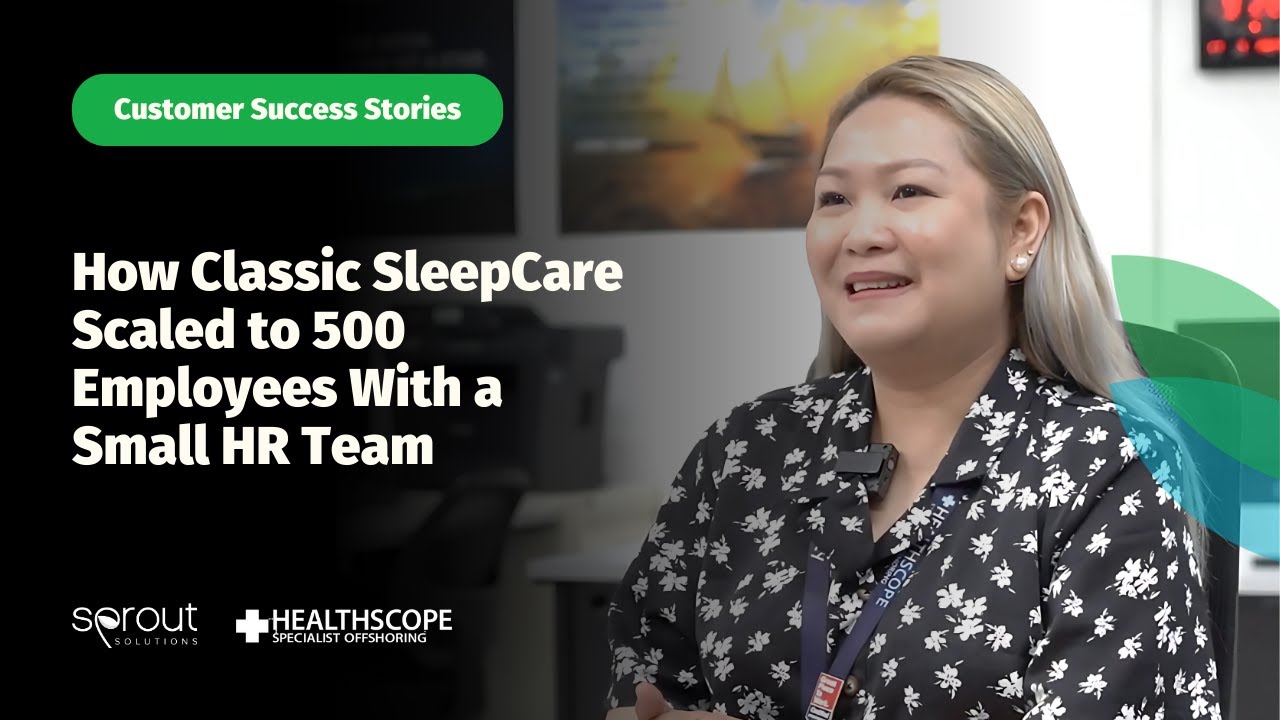
The human cost is just as real. In a 2025 workforce study, 64% of employees reported financial stress due to payroll errors or delays, and 53% said they would consider leaving if the issue persisted, highlighting how quickly payroll mistakes translate into retention risk.
Note: The statistics presented are based on global benchmark data and industry studies.
Labor-Heavy Industries Feel This Most
For the Philippines' labor-heavy industries like BPO, manufacturing, food and beverage, and retail, the problem scales fast.
A single OT miscalculation applied across 400 employees on rotating shifts can produce hundreds of payslip errors in one run. After all, payroll expertise requires a combination of regulatory knowledge, systems proficiency, and operational accuracy that can be difficult to build and scale internally.
In the Philippines, good payroll professionals are hard to hire and harder to retain. The firms most exposed to payroll risk are also the ones with the least bandwidth to absorb it.
Philippine Payroll Compliance Is More Complex Than Most Systems Can Handle
Payroll compliance in the Philippines is governed by five separate agencies, each with its own rates, deadlines, and penalty structures. The rules don't hold still: 2025 brought the largest SSS rate change in years, updated de minimis ceilings from BIR, and the lifting of audit suspensions. In 2026, the regulatory environment is tighter than it has been since before the pandemic. Every rate change that doesn't make it into the payroll system on time creates a compliance gap.
2025–2026 Regulatory Snapshot (May 2026)
| Agency | 2025–2026 Rate | Key Update | Non-Compliance Risk |
|---|---|---|---|
| SSS | 15% of MSC | Rate up from 14% (Jan 2025), per RA 11199 | 2% per month interest on late remittances |
| PhilHealth | 5% of basic salary | Ceiling at PHP 100,000 per UHC Law (RA 11223) | 3% interest/month + PHP 5K–10K fine |
| Pag-IBIG | 2% employee + 2% employer | MFS cap at PHP 10,000, per Circular 460 | Penalties + loan/benefit disqualification |
| BIR | Graduated withholding | RR 29-2025 updated de minimis; RMC 8-2026 lifted audit suspensions | 10%–50% surcharge of tax shortfall + interest + compromise penalty |
| DOLE | Regional wage orders | Hotline 1349 active; SEnA resolution within 30 days | PHP 5,000/employee up to PHP 500,000 per case |
Sources: SSS Circular 2024-06; PhilHealth Advisory PA2025-0002; Pag-IBIG Circular 460; BIR RR 29-2025; BIR RMC 8-2026. Confirmed by PwC Tax Summaries Philippines, December 2025.
Under current Pag-IBIG guidelines, employers are generally required to remit the minimum mandated contribution of ₱200 each for both employer and employee shares, even for employees earning below ₱10,000 monthly compensation. Employers may remit higher amounts through HDMF Additional contributions where applicable.
Compliance Demands Systems, Not Last-Minute Fixes
The SSS increase from 14% to 15% in January 2025 was the fourth rate step under Republic Act 11199. For a 500-person company, every percentage-point change affects total labor cost and every payslip's accuracy.
Pag-IBIG's contribution doubled after the fund raised its cap. BIR's RMC 8-2026 sent a clear signal: the grace period for compliance gaps is over.
Companies running on systems that update automatically when rates change are insulated. Those relying on manual rate tables are exposed every time a new issuance lands. For more guidance, see Sprout's audit-readiness guide.
Why Payroll Can't Be Treated as an Admin Task
Automated computation of SSS, PhilHealth, Pag-IBIG, and BIR withholding, updated with current rates and brackets
Timekeeping integration that feeds shift differentials, OT, and holiday pay directly into payroll without manual re-entry
Audit trails that satisfy DOLE inspection requirements and BIR documentation standards
Automated remittance scheduling with deadline alerts
System updates that absorb regulatory changes like rate increases, de minimis adjustments, new BIR issuances automatically
Organizations that have these capabilities run cleaner and faster, with far less compliance exposure. Those that don't are absorbing regulatory risk into their operating model every payroll cycle. The result: more accurate payroll, reduced compliance risk, and greater confidence at every cutoff.
AI in Payroll Works Best With Strong Systems & Human Oversight
The AI conversation in payroll is changing. The question is no longer whether AI belongs in payroll workflows because it does. In fact, Sprout's State of AI 2025 report found that 89% of Philippine businesses consider AI adoption critical to staying competitive.
What role AI should play?
AI is a support layer, not a decision-maker.
AI as an assistant reflects the current limitations of AI and the nature of payroll itself. While AI can process large volumes of data and automate repetitive tasks, it is still capable of errors and outputs that require validation. For payroll, where accuracy, auditability, and compliance are non-negotiable, these limitations carry real risk.
At the same time, payroll requires deep knowledge of local tax regulations, labor laws, and operational nuances. These are areas where experienced payroll professionals apply judgment that cannot be fully replicated by AI.
Pre-run anomaly detection: Catching duplicate payments, missing deductions, and pay spikes before payroll is finalized, so errors are resolved before employees ever see them, not after a complaint lands in HR.
Compliance monitoring: Flagging regulatory changes like updated tax brackets, new de minimis thresholds before the next run, not after an audit.
Pre-run variance analysis: Comparing the current run against the prior run and flagging anomalies —like headcount shifts, OT spikes, deduction gaps that would otherwise require a manual audit.
Employee query resolution: Reducing administrative workload by handling routine payslip and policy questions, allowing payroll teams to focus on higher-value and exception-based concerns.
Where Human Judgment Is Irreplaceable
AI can automate tasks, but accountability and judgment remain human responsibilities:
- Final pay, tax decisions, and statutory filings require human authorization: no automated output should serve as the final decision point
- Labor law edge cases like retroactive adjustments, contested OT, and final pay disputes require contextual reasoning that AI cannot provide
- Employee disputes require empathy, accountability, and explanation, which are all capabilities that remain uniquely human
- Regulatory interpretation varies by company, industry, and individual situation; AI processes rules but doesn't interpret context
Sprout's Commitment: Humans and AI working together
Sprout's AI Manifesto is built on one principle: AI for human capital augmentation, not replacement. After all, payroll is not an experiment. It's one of the most sensitive trust functions inside an organization.
60% of Filipino employees already view AI as a co-worker rather than a threat. That's the signal for the assistive model, not the replacement model.
PayrollOrg “Getting Pain in America” Survey 2024 vs. 2025 (n=25,900+)
| Model | Best Fit | Risk Level | 2026 Outlook |
|---|---|---|---|
| Human-led, manual | SMEs and low-volume teams | High — errors, burnout, compliance gaps | Reaching its limit as PH regulations tighten |
| System-first, AI-assisted | Mid-to-large enterprises with in-house payroll capacity | Low when well-configured | The emerging standard |
| Fully AI-autonomous | Not viable in any regulated market | Very High | Firmly rejected by all credible industry research |
| Outsourced + AI-enhanced | 300+ headcount, labor-heavy, margin-tight firms | Low — risk managed by specialists | Fastest-growing globally; 8.4% CAGR |
Outsourcing CAGR: Mordor Intelligence, 2025. AI accuracy benchmarks: vendor-reported case studies; actual results vary by configuration.
When Payroll Systems and Managed Expertise Work Best
For organizations with deep in-house payroll teams and mature systems, the right model is system-first, AI-assisted, human-led: built and run internally.
However, for most Philippine companies with 300 or more employees, particularly in BPO, food and business, manufacturing, and retail, this model is difficult to sustain without additional support.
In these cases, the more effective approach is a hybrid model: combining a robust payroll system with managed payroll expertise. The system provides structure, visibility, and control, while external specialists support execution, compliance, and scale.
After all, managed payroll isn't about giving up control. It's about strengthening execution by working with professionals that have operated payroll at scale, with deep and vetted expertise in Philippine tax regulations, labor law, and statutory compliance.
Read Sprout's procurement playbook for a step-by-step guide to evaluating providers.
A Growing Market Signal
The global payroll outsourcing market was valued at approximately USD 12.44 billion (₱696–₱700 billion) in 2025, growing at 6.2% CAGR. Hybrid models, where clients retain approval authority while outsourcing execution, hold 58.3% of that market.
Sprout's own benchmark data from Philippine enterprises shows that organisations moving from manual or fragmented payroll systems to a professionally managed model consistently see payroll accuracy rank among the top five drivers of employee satisfaction.
A single DOLE case, even when successfully defended, can cost ₱80,000–₱200,000 in legal fees and management time alone.
For many mid-sized Philippine companies, a single case already represents several months' worth of payroll system and managed service fees. Over a three-year period, avoiding just one or two payroll-related disputes or compliance findings can often pay back the investment in a robust, compliance-first payroll model many times over.
This is where the difference between choosing the “cheapest” payroll option and choosing a properly configured, compliance-oriented model becomes visible. Any savings on license fees are quickly outweighed if an under-configured process contributes to even one or two DOLE cases or BIR findings over time.
What the Right Partnership Looks Like
Certified and vetted payroll professionals with current knowledge of Philippine labor law and regulatory issuances
A compliance-first system that automatically absorbs SSS, PhilHealth, Pag-IBIG, BIR, and DOLE updates
AI-assisted pre-run validation and anomaly detection before any bank file is released
A multi-level audit process, not a single reviewer, before payroll is finalized
Full transparency into every calculation, so the client can answer any DOLE or BIR question that arises

The company retains full approval authority. The managed service executes, and the client organization signs off on every final payroll run. To learn more, explore Sprout's Managed Payroll Services.
The 2026 Action Plan
The path from high-exposure payroll operations to a compliant, trust-building function isn't a single project. It's a sequence of decisions, with each one building on the last.
The Hidden Cost of Payroll Complexity
The first step is to quantify what your current payroll setup is really costing you today.
Multiply your average number of payslip corrections per cutoff by your estimated cost per error.*
Add any DOLE or BIR-related costs from the last 12–24 months.
Include HR and finance overtime spent on payroll firefighting.
For many Philippine companies, this simple exercise reveals that keeping current manual or under-configured systems is already a six- or seven-figure line item. Investing in the right payroll system and support is, in reality, a cost-reduction decision, not a new expense.
Practical Roadmap to Lower Payroll Risk
Once you have that number, the table below shows the sequence of decisions that can significantly reduce it over time.
When Payroll Works, Trust Follows
Philippine companies that get payroll right in 2026 will do it the same way every high-performing organization does: through the right systems, the right expertise, and (where needed) the right partnerships. After all, the regulatory environment doesn't reward good intentions. It rewards infrastructure. The opportunity is real: payroll that works is payroll that builds trust: with employees, with regulators, and with the leadership teams that depend on it.
“We don't have to worry about what's happening behind the scenes. Our people are happy, and they're getting paid correctly and on time, so we can actually spend our time focusing on what's really important to us.”

Ready to build payroll your people can trust?
Sprout Solutions is the Philippines' largest homegrown HR and payroll platform, built from the ground up for Philippine compliance, culture, and scale. Over 2,000 Philippine business teams and 350,000+ platform users trust Sprout to run payroll accurately, on time, and fully within the law.
Sprout Payroll — A Philippine-built payroll engine covering 32+ computation types required under local labor law, automating 44+ payroll, bank, and statutory reports, and enforcing 100+ DOLE compliance rules so your team is always audit-ready
Managed Payroll Services — Let certified payroll professionals handle execution end-to-end while you retain full approval authority on every run
API Integrations — Already running a global HCM? Sprout integrates directly, so your Philippine payroll stays locally compliant without disrupting your existing infrastructure.
For teams that want to go further, Sprout's connected platform extends payroll into the full employee experience:

AI-assisted HR and payroll support trained on Philippine regulations, so employees get accurate answers without routing every query to HR.

Connect HR, timekeeping, and payroll in one integrated platform. One source of truth, zero reconciliation.

AI-enhanced payroll software built for PH compliance, helping automate calculations, reduce manual work, and give employees self-service access to payroll information.
Outsource payroll administration to Sprout's payroll experts while keeping HR, timekeeping, and payroll connected in one platform for improved accuracy and compliance.
Sources & Notes
Every external figure cited in this report is listed below, consolidated from the footnotes throughout.
Basis for the 2025–2026 Regulatory Snapshot. Confirmed by PwC Tax Summaries Philippines, December 2025.
Manila Bulletin. Final pay as the #1 labor concern (23,496 of 168,853 queries): Philippine Daily Inquirer.
Ernst & Young survey cited by Paycom. Peso conversions use PHP 60 = USD 1 unless otherwise stated.
HR Morning, 2025. Based on global benchmark data and industry studies.
PayrollOrg “Getting Pain in America” Survey 2024 vs. 2025 (n=25,900+); US data. Worker resistance context: HR Dive.
Mordor Intelligence / Avasant, 2025. AI accuracy benchmarks are vendor-reported case studies; actual results vary by configuration.
Sprout's State of AI 2025 report · Manila Standard (AWS research).
Notes on figures
Unless otherwise stated, peso conversions use PHP 60 = USD 1; market-size conversions may use the cited 2025 exchange-rate basis. Statistics on payroll accuracy, error cost, and workforce sentiment are based on global benchmark data and industry studies rather than Philippine-specific samples. The exposure model in Chapter 6 is illustrative; actual figures will differ by organization.